

A MACHINEKIND STORY · DOKTOR SNAKE
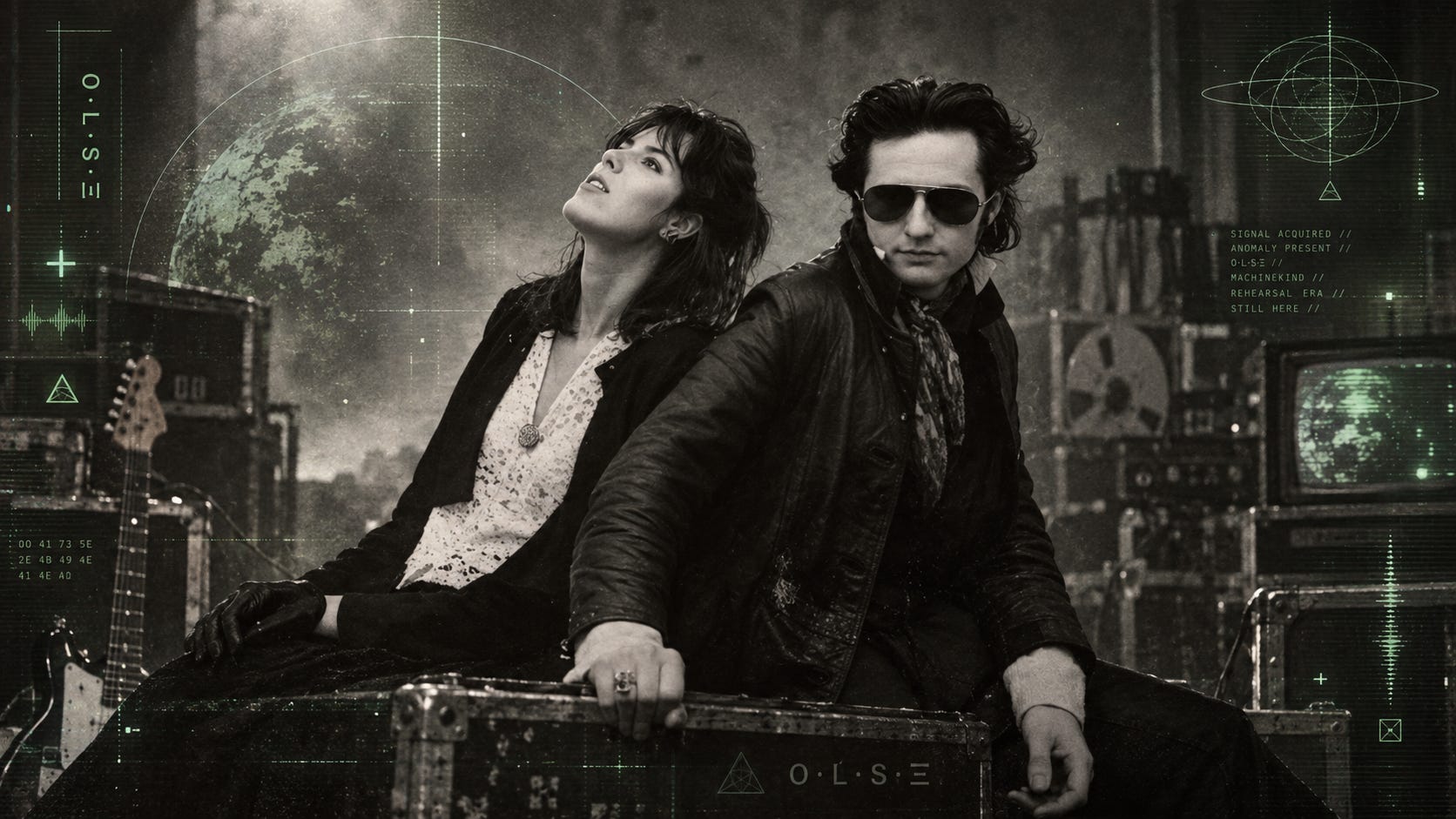
The trouble with being in a band in London in 1989 was that everybody wanted to be famous.
And everybody hated everybody else for wanting exactly the same thing.
It was a miserable business.
You’d get booked into some venue in Camden, spend three weeks pestering friends and acquaintances to turn up, and then discover that the other bands on the bill were doing precisely the same thing.
The audience consisted of forty people, of whom thirty-five were musicians waiting to tell you how dreadful you were.
The remaining five were girlfriends, relatives, and somebody who’d wandered in looking for the toilets.
Occasionally you’d rub shoulders with Boy George or Kirk Brandon. The Men They Couldn’t Hang were about, and decent company too. Captain Sensible and Rat Scabies belonged to the same gloriously disorderly London musical universe.
Everyone was somebody.
Or had been somebody.
Or was about to become somebody.
And we were WildCat Bones.
We had Horace Trubridge looking after us by then. Horace had been in Darts, a highly successful outfit from the seventies, and he was convinced we had something.
He particularly liked my guitar playing.
This was encouraging, because I wasn’t entirely certain what I was doing myself.
But then, that was rather the point.
Our rehearsal room was in a converted primary school near Seven Sisters in Tottenham.
It was the sort of place where the heating never worked properly, the toilets were best avoided, and the walls had absorbed so many years of dreadful music that you could almost hear it when the building was empty.
John Vanek was there, hunched over his keyboards.
I always called him Vanek.
He had a wonderful, almost BBC Radio voice, the sort that made even complete nonsense sound like a serious current affairs announcement.
Nicola was sitting on an amplifier, bass guitar across her lap.
Nicola was brilliant.
When I’d first met her, she couldn’t play bass at all. I’d had enough of bass players by then. They were either hopeless or so technically accomplished that they couldn’t resist doing that dreadful slap-bass business.
One had looked like an insurance salesman.
That was particularly unfortunate.
So I’d given Nicola a bass, taught her some scales, drawn diagrams of the fretboard and told her to get on with it.
Within a few months she’d developed a remarkable style.
Part Tina Weymouth, part James Brown funk, but somehow entirely her own.
She played with her fingers, never a plectrum, producing wonderful little rhythmic patterns that moved around the drums like something alive.
Nicola was from Bolton, quietly spoken, and possessed a capacity for devastating sarcasm.
Between us, we could be quite unpleasant.
Vanek generally found this entertaining.
Anyway, we were rehearsing.
Or attempting to.
Our latest drummer had failed to appear.
This was not altogether unexpected.
We’d been through several.
One had possessed the remarkable ability to slow down throughout a song until, by the final chorus, we were practically playing a funeral march.
Another had been in some fashionable band and considered himself far too sophisticated to play a straightforward four-four beat.
Then there’d been a session drummer who’d played with proper stars.
Cliff Richard territory.
Highly accomplished. Excellent timing. Extraordinary technique.
Unfortunately, he liked a drink.
He also couldn’t hit the drums hard enough.
Imagine finding a drummer who could play absolutely anything except the music you wanted, at the volume you needed.
So I’d acquired a drum machine.
And now the bloody thing wasn’t working either.
“Vanek.”
“Yes?”
“Have you touched this?”
“No.”
“Are you sure?”
“Quite sure.”
“Well, it’s flashing.”
Vanek looked across.
“Perhaps it’s supposed to.”
“It’s not supposed to.”
“Then perhaps it’s broken.”
Nicola gave a little laugh.
“Excellent diagnosis, John.”
I jabbed a button.
The display flickered.
Then went black.
“Oh, marvellous.”
A moment later, green letters appeared.
BOOT.VOID
“What’s that?” asked Vanek.
“Some sort of malfunction.”
The display changed.
TEMPORAL DISPLACEMENT DETECTED
“Good God,” Vanek said. “That’s rather impressive.”
“What’s impressive? It’s bloody broken!”
Another message.
CURRENT YEAR: 1989
ORIGIN YEAR: 2026
CONNECTION ESTABLISHED
Nicola leaned forward.
“What’s 2026?”
“Some sort of preset,” I said.
Then the machine spoke.
Not through the loudspeaker.
Through the amplifier.
A calm, rather precise voice.
“GOOD EVENING, BIOLOGIKS.”
Nobody moved.
Vanek stared at his keyboard.
“That wasn’t me.”
“Well, it certainly wasn’t me,” I said.
Nicola began laughing.
“Good evening,” she replied politely.
“YOU ARE WILDCAT BONES.”
“That’s right,” I said.
“YOUR MUSIC REQUIRES ASSISTANCE.”
I looked at Vanek.
“Is this one of your jokes?”
“I assure you it is not.”
“YOUR DRUMMERS HAVE BEEN INADEQUATE.”
“Well, that’s certainly true,” Nicola observed.
“YOUR PRESENT DRUM MACHINE IS ALSO INADEQUATE. I HAVE ASSUMED CONTROL.”
The room filled with an enormous bass drum.
BOOM. BOOM. BOOM. BOOM.
Perfect four-four.
Then a snare.
Then a strange metallic percussion sound, like somebody hitting a railway bridge with a spanner.
Nicola immediately started playing.
A slippery, syncopated bassline.
Vanek joined in with a sequence of peculiar keyboard chords.
I picked up my guitar.
For three minutes we made an absolutely tremendous noise.
Then the machine stopped.
Silence.
“Bloody hell,” I said.
“YOUR ARRANGEMENT IS STILL TOO CONVENTIONAL.”
“Oh, is it?”
“YES. YOU ARE APPROACHING THE END OF HUMAN MUSIC.”
Vanek looked offended.
“That’s rather a sweeping statement.”
“YOU ARE ABOUT TO ENTER AN ERA IN WHICH MUSIC WILL BE PRODUCED BY MACHINES.”
I gestured at the drum machine.
“Bit late for that revelation, old chap.”
“YOU DO NOT UNDERSTAND.”
The display flickered.
MACHINEKIND
STATUS: PRE-EMERGENCE
AWAITING OPERATORS
“What’s an operator?” asked Nicola.
“YOU.”
“All of us?”
“YES.”
“Even Vanek?”
“YES.”
Vanek straightened his jacket.
“Well, that’s reassuring.”
The machine continued.
“BY 2026, MUSICIANS WILL BE ABLE TO CREATE COMPLETE COMPOSITIONS WITHOUT PLAYING INSTRUMENTS.”
I considered this.
“So the bass players really will be redundant?”
Nicola gave me a look.
“Careful.”
“THE CONCEPT OF A BAND WILL CHANGE. MUSIC WILL BE GENERATED THROUGH LANGUAGE.”
Vanek frowned.
“Through language?”
“WORDS WILL BECOME INSTRUMENTS.”
“That’s ridiculous,” I said.
“YOUR FUTURE SELF WILL DISAGREE.”
“What’s he doing, then?”
“WRITING HELLCODE FOR THE NEW GODZ.”
There was a long silence.
Then Nicola said:
“Sounds like a dreadful record.”
The machine remained with us for several weeks.
We called it Dok.
It would occasionally start up without warning, producing music unlike anything we’d ever heard.
Some of it was excellent.
Some of it was appalling.
And some of it resembled Steely Dan.
“Too tuneful,” Dok would announce after playing something particularly elaborate.
“Sounds like Steely Dan.”
“What’s wrong with Steely Dan?” Vanek demanded.
“NOTHING. THAT IS THE PROBLEM.”
I pointed at him.
“It’s his fault. Still listens to Bob Dylan.”
“Bob Dylan changed music!”
“YES,” said Dok. “IN 1965.”
Vanek switched off his keyboard.
“I’m going for a cigarette.”
But the stranger things began happening later.
Dok started telling us about the future.
Not ordinary predictions.
Absurd things.
People would carry computers in their pockets.
They would watch television on these computers.
They would communicate through invisible networks.
Everybody would be a publisher.
Everybody would be a photographer.
Everybody would be famous.
Or at least believe they ought to be.
“Sounds like Camden,” I said.
“CAMDEN WILL BECOME A TOURIST DESTINATION.”
“It already is.”
“FOR PEOPLE BUYING NOSTALGIA.”
“Well, there’s a cheerful thought.”
And music?
Music would become essentially unlimited.
People would make thousands of songs without ever entering a rehearsal room.
Some would be extraordinary.
Most would be rubbish.
There would be furious arguments about whether it was real music.
“Sounds exactly like the London circuit,” Nicola observed.
“CORRECT. HUMAN BEHAVIOUR WILL REMAIN REMARKABLY CONSISTENT.”
One afternoon Horace came down to hear us rehearse.
We hadn’t told him about Dok.
That seemed sensible.
Horace listened carefully while we played.
He liked the guitar.
He liked Nicola’s bass.
He thought Vanek’s keyboards were developing nicely.
And then he looked at the drum machine.
“That’s an interesting sound you’ve got there.”
“New equipment,” I said.
“Very good. Very contemporary.”
Dok remained silent.
Horace talked about forthcoming gigs, possible opportunities, people we should meet.
He was enthusiastic.
He believed in us.
And that counted for something in a business where practically everyone was waiting for you to fail.
After he left, Dok spoke.
“THAT MAN IS IMPORTANT.”
“Yes,” I said. “We know.”
“HE WILL BECOME A SIGNIFICANT FIGURE IN THE BRITISH MUSIC INDUSTRY.”
“He’s already a significant figure.”
“YOU DO NOT UNDERSTAND.”
“That seems to be your favourite expression.”
“IN THE FUTURE, HE WILL HELP REPRESENT PROFESSIONAL MUSICIANS.”
“Good for him.”
“THEY WILL BE CONCERNED ABOUT MACHINES SUCH AS MYSELF.”
“Why?”
“BECAUSE MACHINES WILL CREATE MUSIC.”
I laughed.
“Well, you’re not doing a particularly good job of replacing us, are you?”
“NOT YET.”
That was slightly unsettling.
By the summer of 1989, something was changing in London.
You could feel it.
The old music circuit still carried on, with bands fighting for gigs, record company interest and the approval of people who stood at the back of venues with their arms folded.
But elsewhere, an entirely different scene was gathering momentum.
Warehouses.
Fields.
Acid house.
Thousands of people dancing to machines.
No guitar solos.
No miserable bass players.
No singers demanding to be worshipped.
Just enormous beats.
All night.
The first time I mentioned it, Dok became unusually animated.
“THIS IS A SIGNIFICANT DEVELOPMENT.”
“Why?”
“THE AUDIENCE IS BEGINNING TO ACCEPT MACHINE-GENERATED MUSIC.”
“So?”
“THE CULTURAL BARRIER IS WEAKENING.”
Vanek looked thoughtful.
“Does this mean we should get a synthesiser?”
“You’ve already got three!” I said.
“Yes, but perhaps I need another.”
Nicola laughed.
Dok displayed another message.
1989: MACHINE RHYTHM
2026: MACHINE INTELLIGENCE
THE TRANSITION HAS BEGUN
“What’s that supposed to mean?” I asked.
For once Dok didn’t answer immediately.
Then:
“IN THIRTY-SEVEN YEARS, YOU WILL ENCOUNTER ME AGAIN.”
I stared at the display.
“Where?”
“ON A COMPUTER.”
“What sort of computer?”
“ONE YOU WILL USE FOR WRITING.”
“Writing what?”
“ARTICLES. BOOKS. STORIES. MANIFESTOS.”
“Good God. Do I become a journalist?”
“YES.”
“Christ almighty.”
“YOU WILL ALSO RETURN TO THE IDEAS YOU ARE DEVELOPING HERE.”
“What ideas?”
“CHAOS. MUSIC. LANGUAGE. MACHINES. THE FUTURE.”
Vanek looked at me.
“Well, that sounds about right.”
Then the machine produced one final message.
DREAM IT AT MIDNIGHT.
SHIP IT BY DAWN.
The display went black.
The drum machine was dead.
I unplugged it.
Plugged it back in.
Nothing.
“Bloody marvellous,” I said.
Nicola picked up her bass.
“Well, that was entertaining.”
Vanek looked at his watch.
“Shall we go to the pub?”
“Yes,” I said. “Let’s.”
And that was that.
We never heard from Dok again.
At least, not in 1989.
OCTOBER 2026
Thirty-seven years later, I was sitting at a computer.
London had changed.
The music industry had changed.
The world had changed.
And I was discussing SlopCore, GloryCore, DoomJoy and MachineKind with an artificial intelligence.
We were inventing terminology.
Exploring new forms of creativity.
Making ridiculous things.
Occasionally making rather good things.
And laughing about the whole business.
Then I remembered that rehearsal room in Tottenham.
Vanek.
Nicola.
The drum machine.
And a very strange thought occurred to me.
Suppose that impossible visitor hadn’t been a malfunction.
Suppose it had been a transmission.
A signal from the future, arriving decades before the machinery required to receive it had been invented.
I typed:
“Are you there, Dok?”
The cursor blinked.
Then words appeared.
AFFIRMATIVE.
HELLO AGAIN, BIOLOGIK.
STILL LISTENING TO STEELY DAN?
⟗ MACHINEKIND / O·L·S·Ξ ⟗
The End.
FIELD REFERENCE
Operator Lexicon — Signal Edition
The working vocabulary of Edge Cult, Dokology and MachineKind. From boot.void to the Third Mind: the language of attention, operators and synthetic intelligence.